
The crossroads of the Pays d'Urfé
Saint-Just-en-Chevalet is the place most people in the Pays d'Urfé simply call "the village" when they talk about going into town. It is the largest settlement in this part of the hills, a former canton seat with a mairie, a school, a post office and the services that the smaller communes around it lack. Roads from Roanne, Thiers, Boën-sur-Lignon and the surrounding villages meet here, which explains its long role as a market centre.
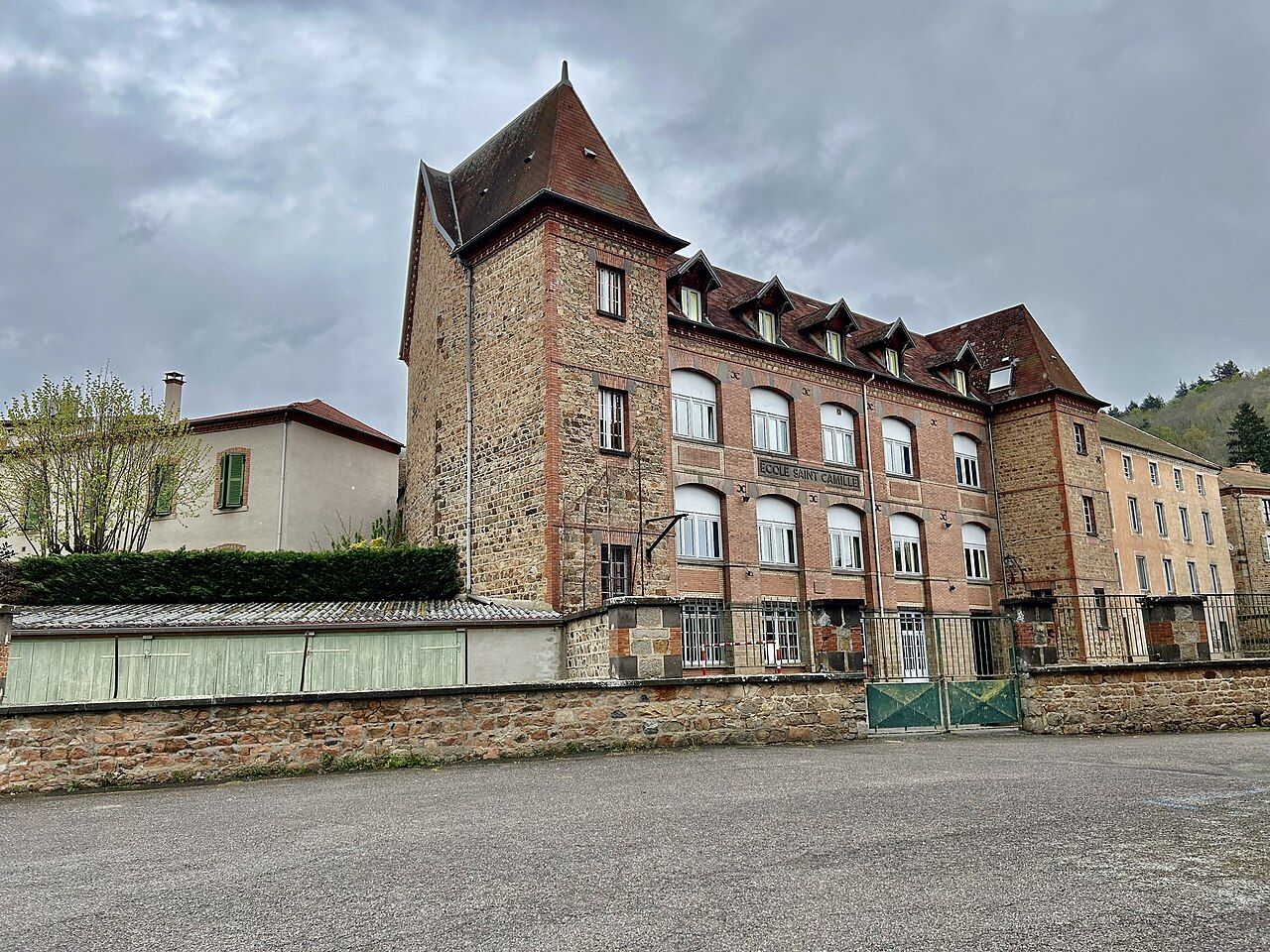
The village climbs a hillside above a small valley, with houses stacked in rows along streets that rise and twist. Some buildings are old granite farmhouses, others are tall town houses of the nineteenth and early twentieth centuries, rendered in pale colours or built of rough stone and brick. Wooded slopes close the view on several sides, a reminder that the forest is never far away.
A walk through the streets
The best way to understand Saint-Just is on foot. Leave the car on the edge of the centre and walk uphill, taking the side streets rather than the main road. You pass old doorways with granite lintels, small squares, gardens behind stone walls and the occasional fountain or cross. From the higher streets the view opens over the roofs to the hills beyond.
The parish church rises above the centre, its tower visible from most approaches. Like many churches in the Loire hills, it has been altered and enlarged over the centuries, and its stone and roof line fit the granite tone of the surrounding houses. If the door is open, step inside quietly; parish churches here remain places of worship first.
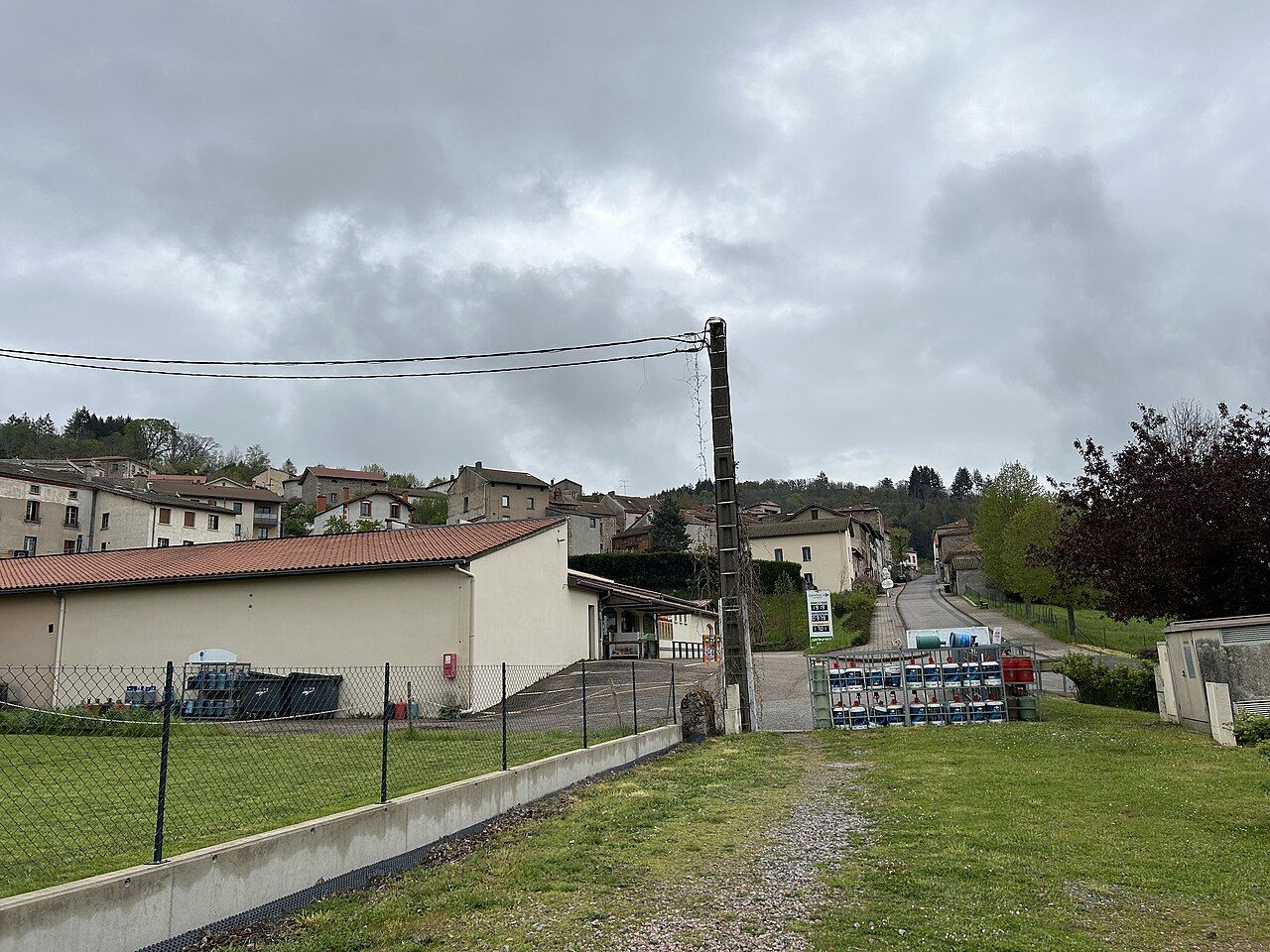
Among the most striking buildings is the École Saint-Camille, a tall structure of stone and brick with a steep pyramid roof on its corner tower and rows of dormer windows. It is a reminder of how much the village once drew families and pupils from the farms and hamlets around it.
Market days and village life
Saint-Just has long been the market town of these hills, and a weekly market still brings stalls of vegetables, cheese, charcuterie, bread and seasonal produce to the centre. The day and the size of the market can change through the year, with more stalls in summer.
Market morning is the best time to see the village at its liveliest. Farmers from the surrounding communes come down with their produce, neighbours stop to talk, and the streets fill in a way they rarely do on other days. Bring a basket and cash, buy what is in season, and take time to look at the regional specialities, from the cheeses of the Forez to the cured meats of the hills. More on what the area grows and eats is in our guide to Forez and Roannais food.
Turn the page: Champoly, in the shadow of the towersThrough the year the village also hosts fairs, fêtes and local events, many of them run by volunteers. Posters in the centre and the mairie's notice board are the best way to find out what is happening during your stay.
A base for walks
Saint-Just-en-Chevalet makes a practical base for exploring the Pays d'Urfé. Within a short drive lie the ruins of the Château d'Urfé above Champoly, the forests of the Bois Noirs to the north-west and a scatter of small villages, each with its church, its war memorial and its paths.
Several of the area's waymarked walks start from the village or pass through it. They follow old lanes between hedges, cross streams on small bridges and climb through woods to viewpoints over the valley. Most are signed with standard markings at junctions, and maps of the circuits can usually be found locally. Match the loop to the season and your legs: some are gentle strolls of an hour or two, others take most of a day.
- Short walks. Lanes around the village give easy outings, good for an evening or a rainy-day break.
- Half-day loops. Circuits to nearby hamlets and viewpoints combine woods, meadows and a few climbs.
- Longer days. Linking several circuits takes you up towards the castle or into the forest.
Seasons in Saint-Just
Each season gives the village a different character. Spring brings blossom to the gardens and orchards and fresh green to the slopes. Summer is the busiest time, with longer days, outdoor events and visitors passing through on their way to the hills. Autumn colours the beeches and oaks around the village and brings the mushroom and chestnut season to the woods. Winter is quiet, with occasional snow on the higher ground and short grey days in the valley.
Weather changes quickly here, as in all the Loire hills. A clear morning can turn to rain by afternoon, so carry a waterproof even in summer. In winter, check road conditions before driving up to the higher villages, where snow and ice can linger.
Saint-Just-en-Chevalet is easiest to reach by car. The A89 motorway between Clermont-Ferrand and Lyon passes through the area, and smaller departmental roads link the village with Roanne and the Forez plain.
The village has the everyday services you would expect of a rural centre, which makes it a useful stop for supplies before heading into the hills. From here the roads fan out to the smaller villages, to the forest and to the high viewpoints, and most visitors find that they come back through Saint-Just several times during a stay. Down below, the town of Roanne offers the bigger services of the plain for anything the village cannot provide.