
The architecture of the Pays d'Urfé is not grand, but it is deeply rooted in place. Farmhouses, barns, bread ovens, wayside crosses and village churches were built from the materials at hand, by people who worked the land and needed buildings that could withstand cold winters and steep slopes. Learning to read them adds a new layer to any walk.
Built from the hills
The hills are made largely of granite, and so are the buildings. Walls are thick, built of rough blocks or rubble set in lime mortar, with larger dressed stones for corners, door frames and window surrounds. The stone varies in colour from grey to pinkish or golden, depending on the local rock and on the lichens that colonise it over time. Many walls were once rendered and the render has partly fallen away, revealing the stone beneath.
Granite is hard to work, so decoration is sparse. Look for carved lintels over doors, sometimes bearing a date, initials or a simple symbol, and for stone steps, troughs and gateposts. These details record the families who built and rebuilt the farms over generations.
The farmstead
A traditional hill farm often combined house, barn and stable in a single long building or a tight cluster around a yard. The living quarters occupied one end, while animals and fodder took the rest, with a large barn door, sometimes reached by a ramp, giving access to the hayloft above the stable. This layout kept animals and hay close at hand through the long winter.
Farms were built to suit the slope, often set into the hillside with the barn entrance at the upper level. Many stand in small hamlets rather than isolated sites, sharing a spring, a lane and sometimes an oven. Today, some are still working farms, some have become homes and others stand empty. All are private property; enjoy them from the road or footpath.
Roofs
Roofs show the meeting of influences in this area. Rounded clay tiles on gently pitched roofs are common in the Loire, reflecting southern traditions, while flat tiles, slate or other materials appear in some places, especially on steeper roofs and more recent repairs. Older roofs may have been thatched in the past. The mix of roofing styles gives each village its own texture.
Bread ovens
Turn the page: Saint-Priest-la-Prugne, the village of the forestBread was baked at home or in shared ovens, and many hamlets still have a small stone bake-house, either freestanding or built against a farm. The oven itself is a domed chamber of stone or brick, heated with a wood fire, then cleared and loaded with dough. Larger farms might have their own, while smaller households shared a communal oven, baking in turn.
Some ovens have been restored by village associations and are fired up for occasional festivals; dates vary. Others stand quietly at the edge of a hamlet, their chimneys and small doors easy to miss. Look for a low building with a curved back wall projecting from the main structure.
Stone crosses at the crossroads
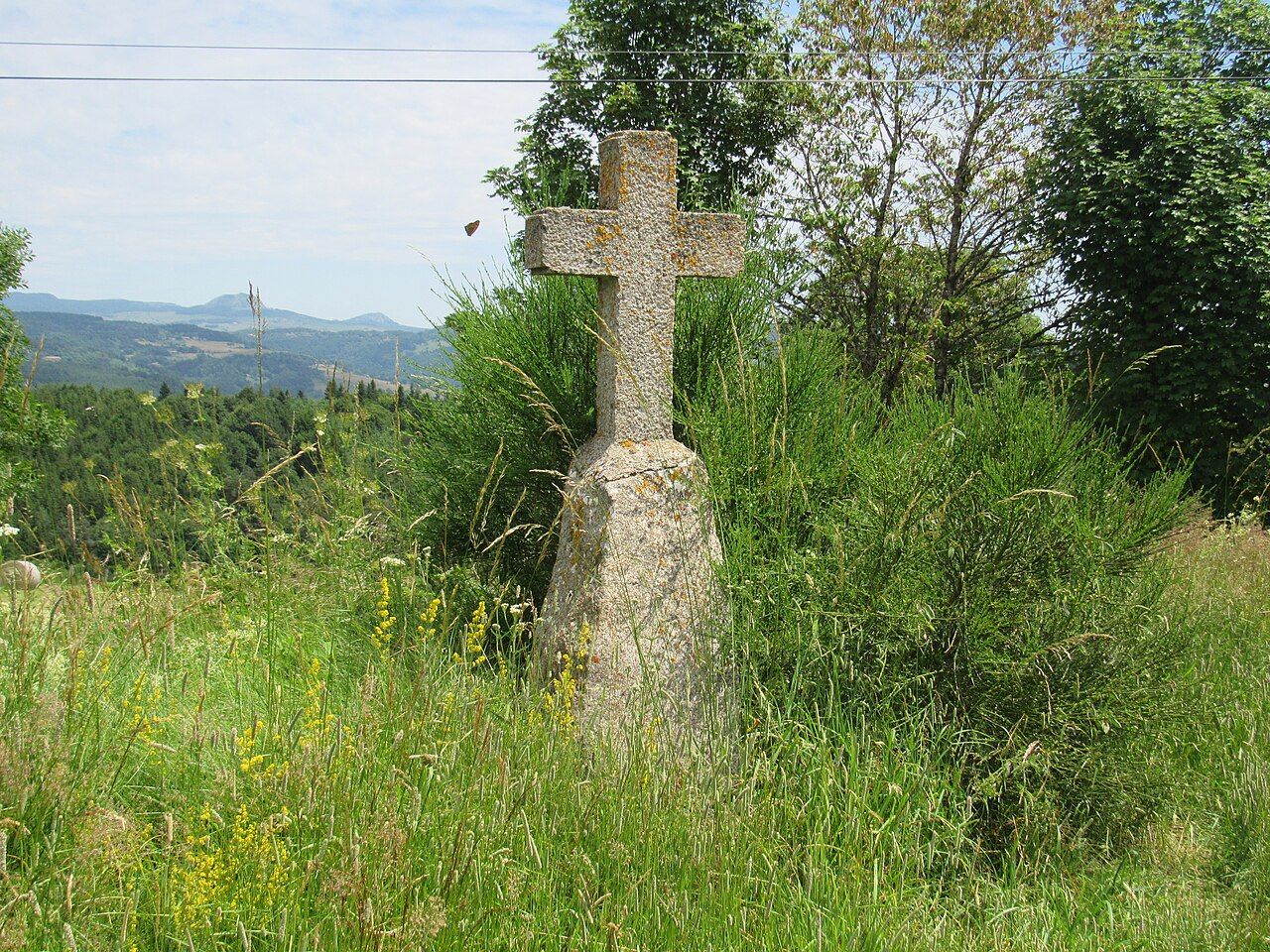
Crosses are everywhere in the Pays d'Urfé: at crossroads, beside chapels, at the edge of villages and along old paths. Most are of granite, raised on a base or a stepped plinth, and many date from the seventeenth to nineteenth centuries, though some may be older. They marked routes, sanctified places, commemorated events or served as stations for processions.
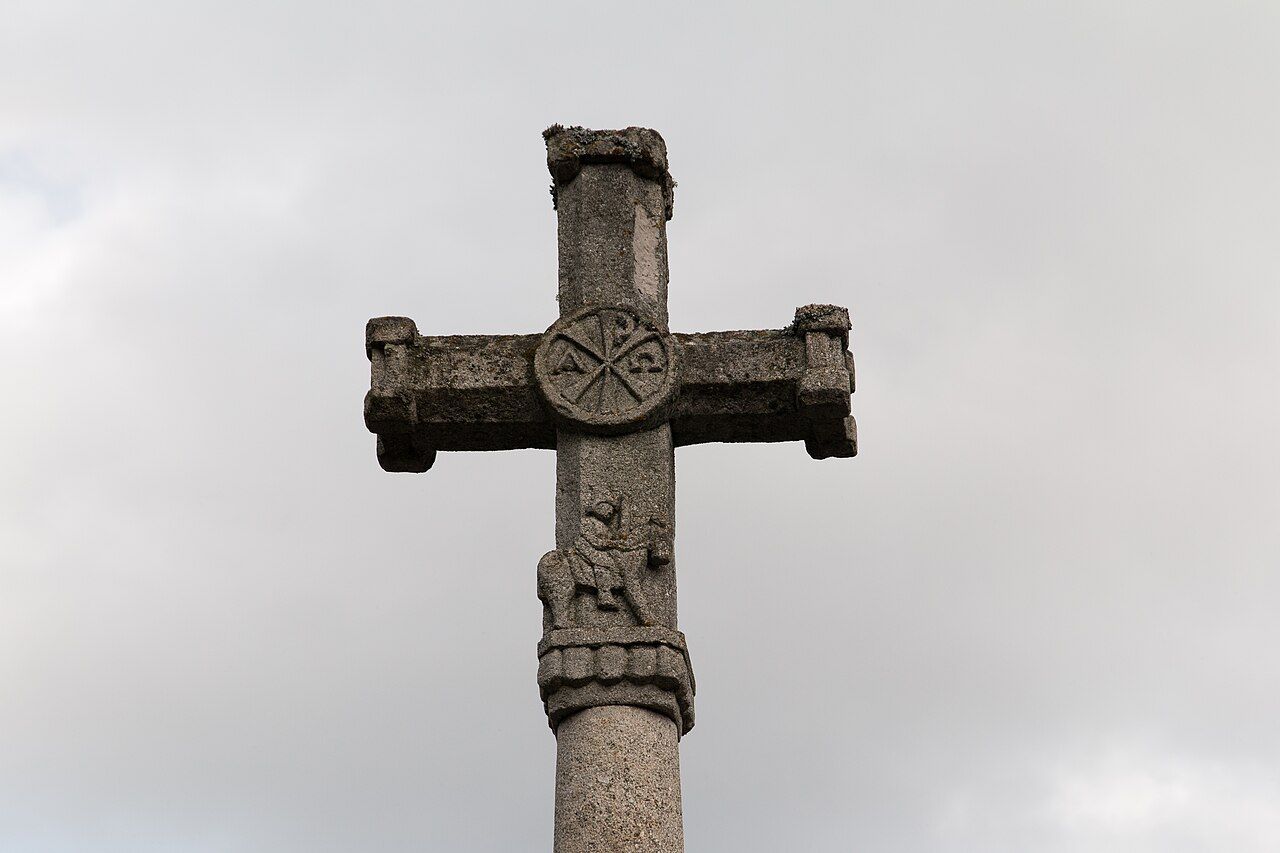
Their designs vary from simple shafts with plain arms to elaborate pieces with carved figures, symbols, inscriptions and dates. Lichen and moss often cover them, and some lean or bear the marks of weathering. Take time to look closely: a small carving or worn inscription can reveal a story. Treat them with respect; many are still cared for by local people.
Churches and chapels
Village churches are usually the largest buildings in each commune and the focus of local history. Many were rebuilt in the nineteenth century, though some retain older parts. Their granite towers and bells punctuate the landscape, and their interiors may hold statues, paintings and memorials. Small chapels dot the countryside too, often linked to local saints or pilgrimages.
Opening hours vary and some churches are kept closed outside services. The villages of Saint-Romain-d'Urfé, Champoly and Cherier each have churches and old houses worth seeing on a walk.
Exploring on foot
The best way to appreciate rural architecture is on foot, following lanes and paths through hamlets. Our guide to the waymarked walks explains the local circuits, many of which pass farms, crosses and ovens. Go slowly, look at walls, roofs and doorways, and notice how buildings respond to the slope, the sun and the weather.
Remember that these are lived-in places. Stay on public roads and paths, do not enter yards or buildings without permission, and keep noise down near homes. Photographs from the lane are fine, but avoid photographing people or their homes in an intrusive way. Look out, too, for the small things: a stone trough where a spring is channelled beside the lane, a dry-stone wall holding up a terrace, a niche above a door that once held a statue, a millstone reused as a step. Each was made with effort and kept because it was useful, and together they make the hamlets far more interesting than their modest size suggests. With a little care, a walk through the hamlets can become a quiet lesson in how people built a life from granite, wood and the land.
Here ends the chapter. Back to the contents.