
The food of the Pays d'Urfé reflects its position between two worlds. To the south lie the Monts du Forez, a land of summer pastures and cheese. To the north and east spreads the Roannais, with its vineyards and market gardens. In between, the hill villages have long lived on what small farms could produce: milk, pigs, potatoes, chestnuts and whatever the woods offered in season. The result is simple, filling cooking with a few products of real distinction.
Fourme de Montbrison, the blue of the Forez
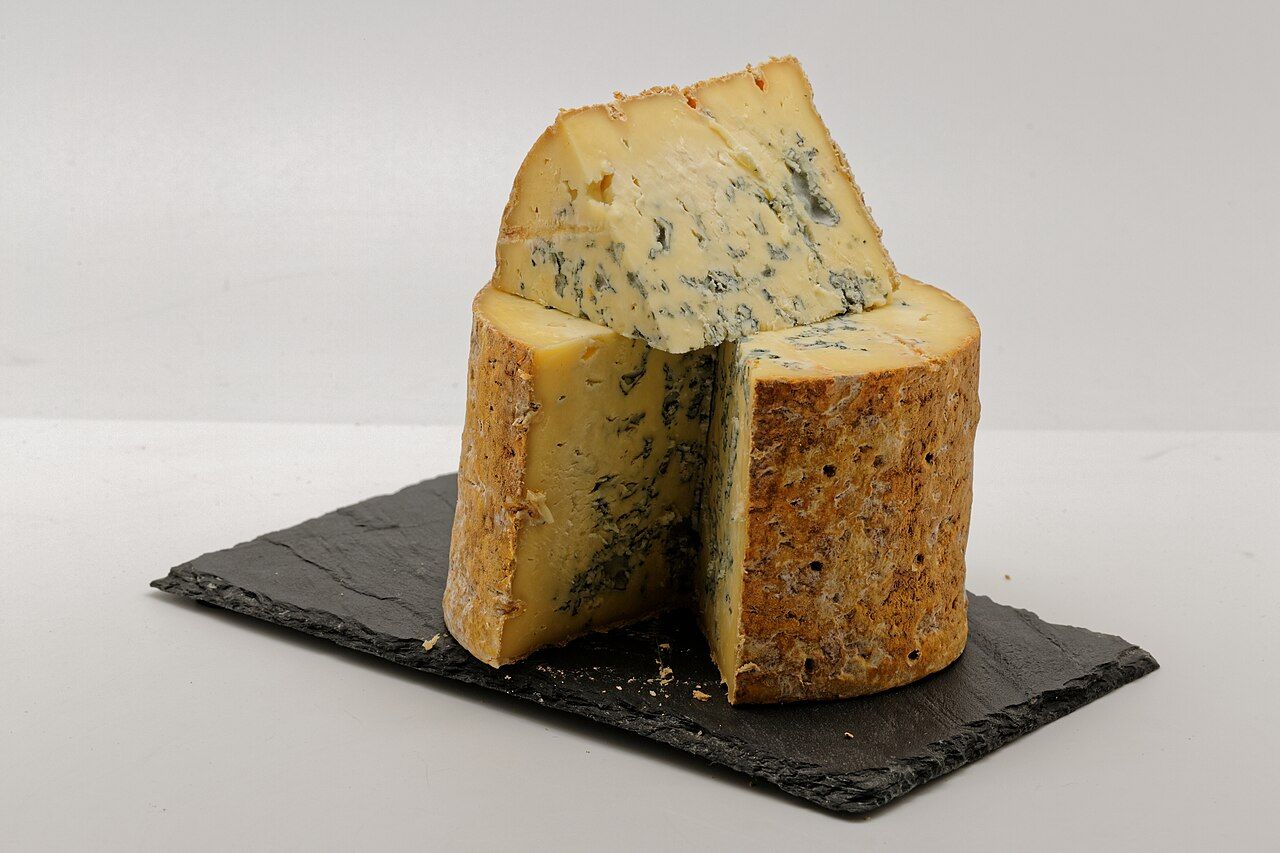
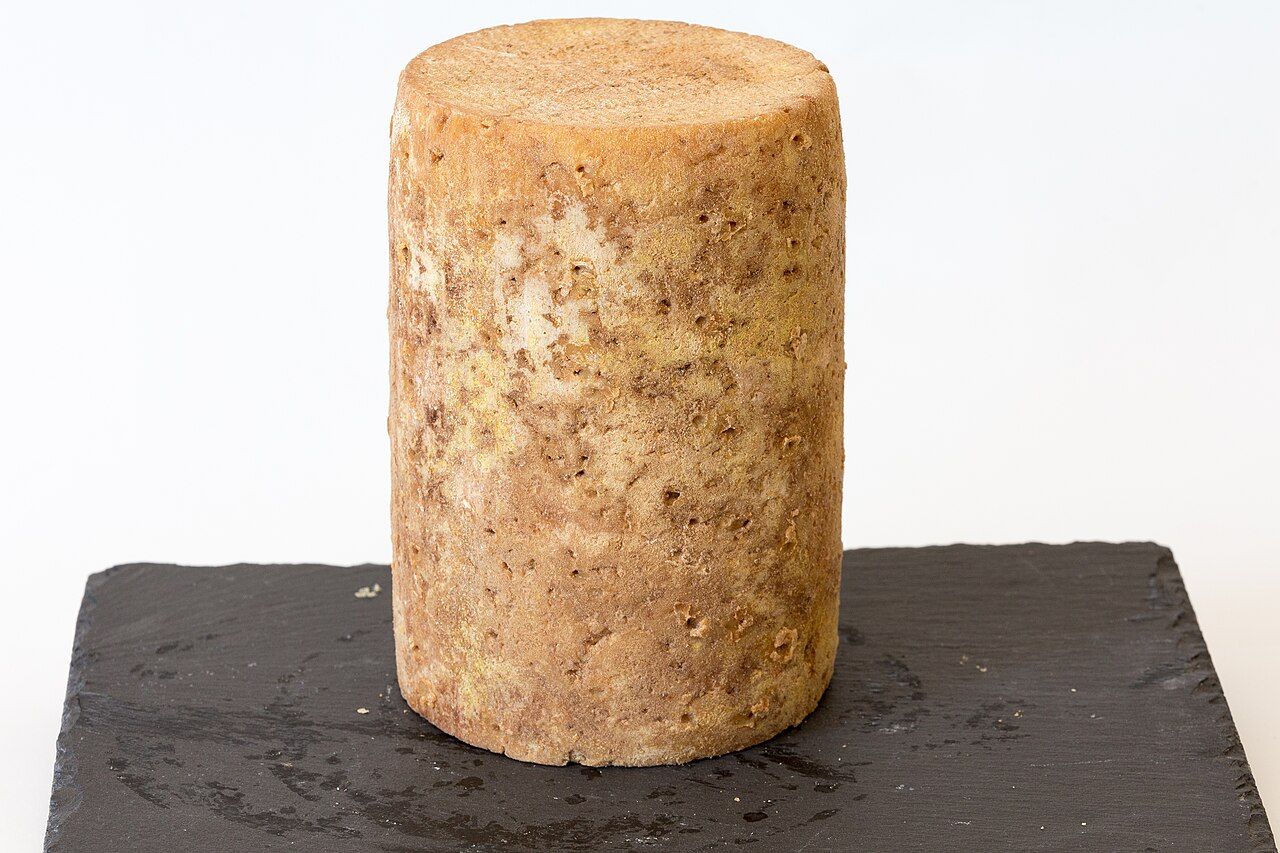
The best-known product of the area is Fourme de Montbrison, a cow's-milk blue cheese made in the Monts du Forez and around Montbrison, protected by its own appellation. It comes as a tall cylinder with a dry, orange-brown rind, and the paste inside is pale and creamy, marbled with fine blue veins. Compared with stronger blues, it is mild and supple, with a gentle, nutty flavour.
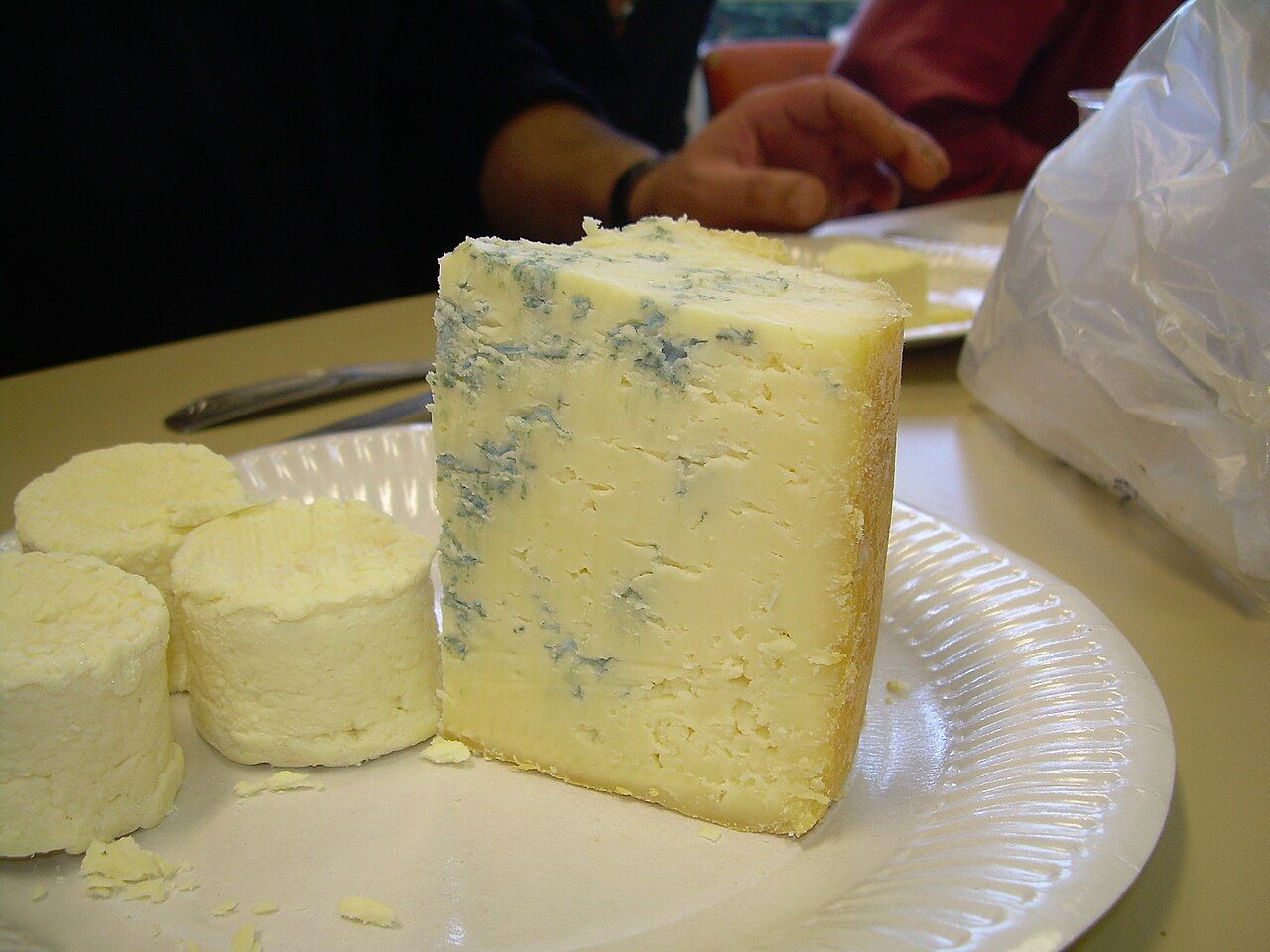
Fourme was traditionally made in summer in the jasseries, stone farm buildings on the high pastures of the Forez, where families brought their cattle for the grazing season. That way of life has largely disappeared, but the cheese remains a link to it. Its close relative, Fourme d'Ambert, comes from the Auvergne side of the same mountains. The high pastures themselves are described in our guide to Noirétable and the Forez hills.
Fourme de Montbrison is eaten on its own with bread, crumbled into salads, melted into sauces or served with potatoes. It pairs well with the local red wines and with sweet accompaniments such as pears or walnuts.
Wines of the Côte roannaise
On the eastern slopes of the Monts de la Madeleine, facing the Roanne plain, lies the small vineyard of the Côte roannaise. The vines grow on mostly granite-based soils at the foot of the hills, mainly Gamay, the grape of Beaujolais. The wines are mostly light, fresh reds and rosés, with bright fruit and a slightly mineral edge. They are best drunk young and slightly cool, and they suit the local food perfectly.
The appellation is modest in size and many producers are small family operations. Tasting is possible at various estates in the villages along the slopes, but arrangements, hours and conditions vary. The Roannais more broadly is the subject of our page on Roanne and the Roannais.
Charcuterie and pork
Turn the page: Along the Lignon, the river of a pastoral novelPigs were once kept on most farms in the hills, and the annual slaughter supplied the household with sausages, hams, pâtés and lard for the year. That tradition shows in the range of charcuterie still found across the Loire département: dry sausages, cooked sausages for poaching, terrines, salted pork and smoked meats. Many butchers and farms make their own, and quality is often high.
Cooked sausage served with lentils or potatoes is a classic winter dish, and a platter of dry sausage, ham and pickles with country bread makes an easy lunch before a walk.
Râpée and potato dishes
Potatoes grow well in the hills, and they appear in many local recipes. The best known is the râpée, a grated potato cake fried in a pan until crisp and golden on the outside and soft inside. It is associated with the Forez and the Saint-Étienne area, and it is often served with a green salad or alongside meat. Variations add onion, egg, garlic or herbs.
Other potato dishes include gratins enriched with cream and cheese, and hearty soups thickened with potatoes and vegetables. In the hills bordering the Bourbonnais, potato pies wrapped in pastry are also part of the tradition.
Farm produce through the seasons
Beyond the famous products, the area offers seasonal food from small farms: fresh goat's and cow's cheeses, butter, cream, eggs, honey from the hills, and fruit and vegetables from gardens and orchards. Autumn brings chestnuts, walnuts, apples and pears, and the woods add mushrooms for those who know how to pick them safely, as described in our autumn guide.
Weekly markets in the larger villages and towns are the easiest way to find local produce and see what is in season. Saint-Just-en-Chevalet is the market village of the Pays d'Urfé; market days and stalls change over time. Some farms sell directly, often indicated by roadside signs; opening times and arrangements vary.
Eating well on a walking day
A picnic is the natural way to combine local food with the landscape. A piece of Fourme de Montbrison, some dry sausage, a loaf of country bread and fruit from the market make a lunch that travels well in a rucksack and tastes even better at a viewpoint. In autumn, add a few roasted chestnuts.
Cheese keeps best wrapped in paper rather than plastic, and a cool bag helps in summer. If you want to take wine home, keep it out of direct sun in the car. Bread matters too: a dense country loaf with a thick crust keeps for a couple of days and stands up to strong cheese and sausage far better than a delicate baguette. Ask at the market what is local, and taste before you buy where stallholders offer it; most are happy to talk about how their cheese or charcuterie is made. Whatever you buy, eating it on a ridge with the Forez and the Roannais spread out below is the best way to understand where it comes from.