
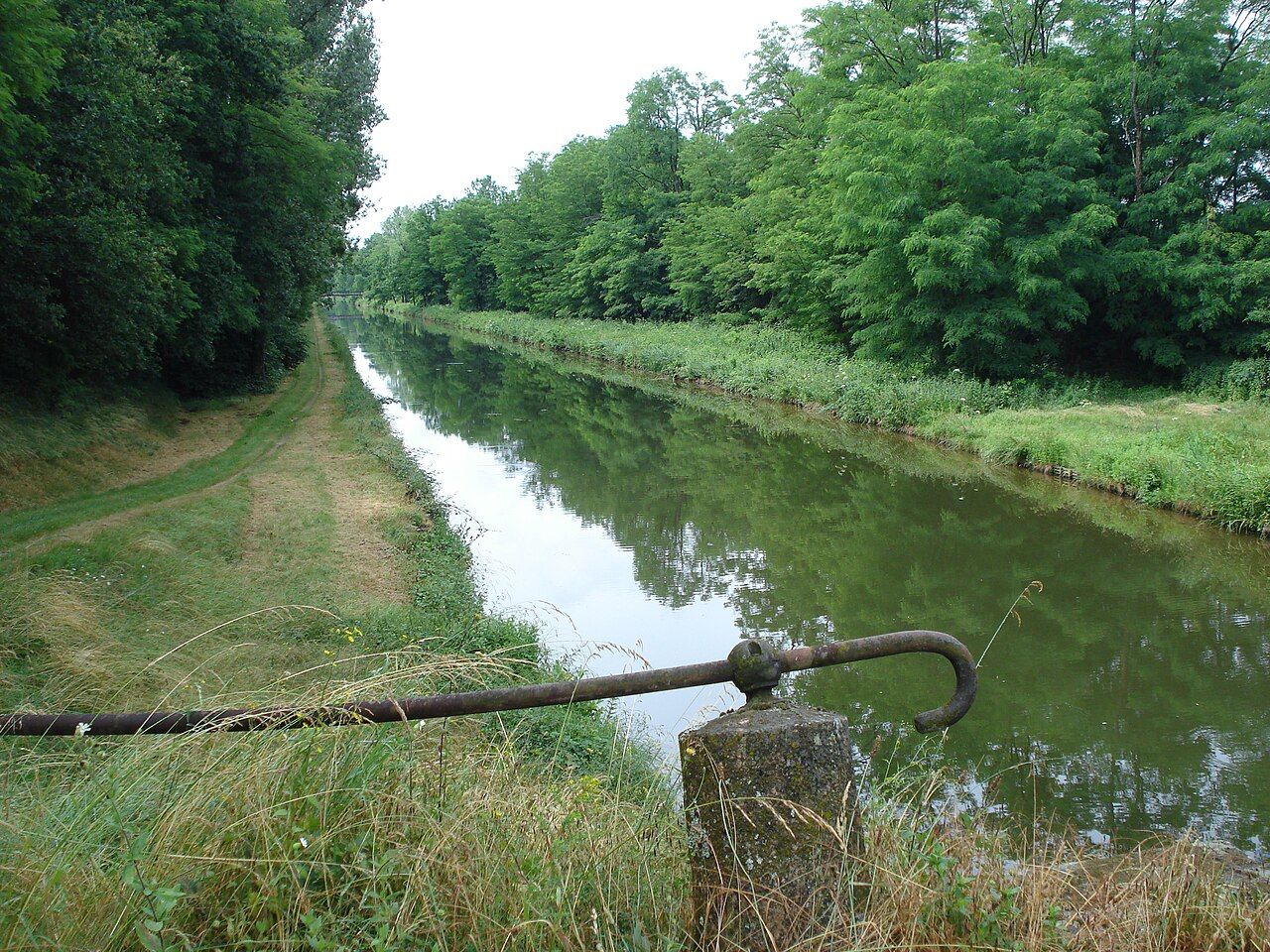
After a few days in the hills, a trip down to Roanne makes a pleasant contrast. The largest town in the north of the Loire département sits on the river in a broad, flat basin, ringed by the Monts de la Madeleine to the west and the Beaujolais hills to the east. It is a working town with an industrial past, but it also has a historic centre, a museum, a marina and a canal that leads north through quiet countryside.
Getting there from the hills
From most of the Pays d'Urfé, Roanne is a drive of under an hour on winding roads that drop from the hills into the plain. The descent itself is part of the experience, as the forests and granite farms give way to hedges, cattle pastures and wider horizons. Roanne also has a railway station with regional trains; timetables change.
If you are staying around Saint-Just-en-Chevalet or another hill village, a half-day is enough for a stroll through the centre and a walk along the canal. A full day allows time for a museum visit and a detour through the vineyards on the way back.
The town on the Loire
Roanne grew as a river port, long a starting point for flat-bottomed boats carrying goods downstream towards Orléans and Nantes. Later it became an industrial centre, known for textiles and engineering. Traces of that history remain in the old quays, the warehouse buildings and the grid of streets laid out in the nineteenth century.
The historic core is compact and easy to explore on foot. The remains of the medieval castle keep, the church of Saint-Étienne and the streets around the town hall give a sense of the older town. The Musée Joseph-Déchelette, the municipal museum, holds collections of archaeology, fine arts and decorative arts, including faience; opening days and admission can change.
The Loire itself, wide and braided, flows past the town between gravel banks and wooded islands. Riverside paths make an easy walk, especially in the morning or evening light.
The Canal de Roanne à Digoin
Turn the page: Cherier and the long view eastBecause the Loire upstream of Digoin was difficult to navigate, a canal was built in the nineteenth century to connect Roanne with the wider French waterway network. The Canal de Roanne à Digoin runs north from the town for about fifty kilometres, alongside the river, with locks and lock-keepers' houses along the way. Today it carries mostly leisure boats, and its basin in Roanne serves as a marina.
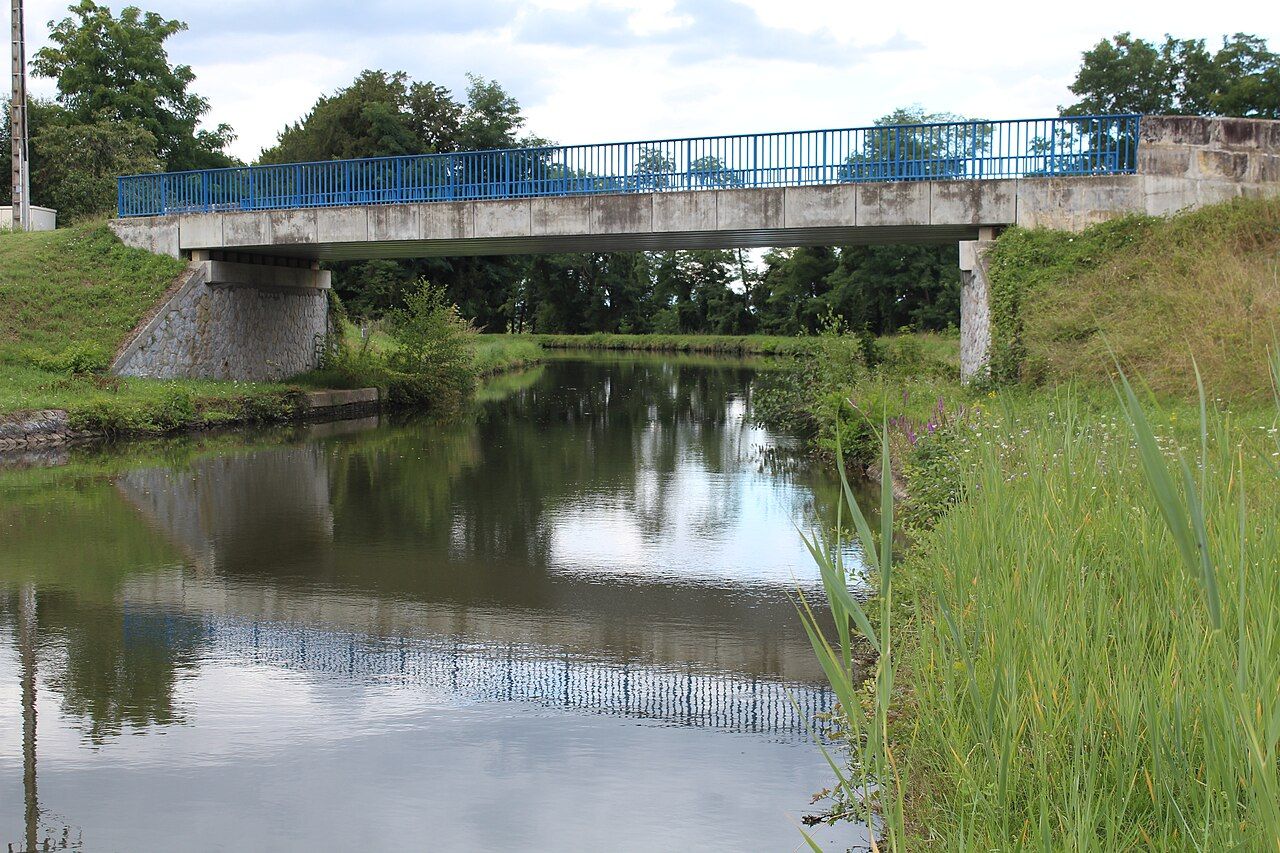
The towpath is ideal for walking or cycling, flat and largely shaded by trees. You can follow it as far as you like and return the same way, watching for herons, kingfishers and dragonflies. The scenery changes slowly, from the edges of the town to farmland and small villages, with locks every few kilometres. It is a peaceful counterpoint to the climbs of the hills, and a good option for a day when the weather on the heights is poor.
The Roannais plain and its edges
Beyond the town, the Roannais is a gently rolling land of pastures, hedges and villages, known for cattle and mixed farming. To the north, the small town of Charlieu has a celebrated Benedictine abbey, and the wider area towards the Brionnais in Saône-et-Loire is rich in Romanesque churches. Those make good additions to a day out if you have a car and time.
To the west, the slopes of the Monts de la Madeleine carry the vineyards of the Côte roannaise, mainly planted with Gamay. A drive along the lanes at the foot of the hills shows vines, orchards and villages with long views back over the plain. The wines and other local products are covered in our guide to what the Forez and Roannais eat.
From the hill villages, the plain is often visible as a broad blue-green floor below. Seeing it up close helps make sense of the views from high points such as the Château d'Urfé, where the Roannais spreads out to the horizon.
Parking is generally easy in Roanne, though the centre can be busy on market days. Bring comfortable shoes for the streets and towpath, and if you have bikes, the canal path is one of the easiest rides in the region. Summer days in the plain can be hot, noticeably warmer than in the hills, so carry water and plan walks for the cooler parts of the day.
Opening times for museums, churches and other sites vary by season and day, and some close for part of the week.
Combining town and hills
One satisfying itinerary is to spend the morning in Roanne, walk a stretch of the canal, then drive back into the hills through the vineyards, finishing at a viewpoint where you can look down over the ground you covered. The change in altitude, from the Loire at under 300 m to ridges approaching 1,000 m, is striking in so short a distance.
The town and the hills share a long history. Hill farmers once came down to the Roanne markets to sell cattle and produce, and the river trade carried timber from the forests. Our piece on L'Astrée shows how the Forez side of the region built its own legend; Roanne, by contrast, built its fortunes on water and industry. Seeing both gives a fuller picture of the region.