
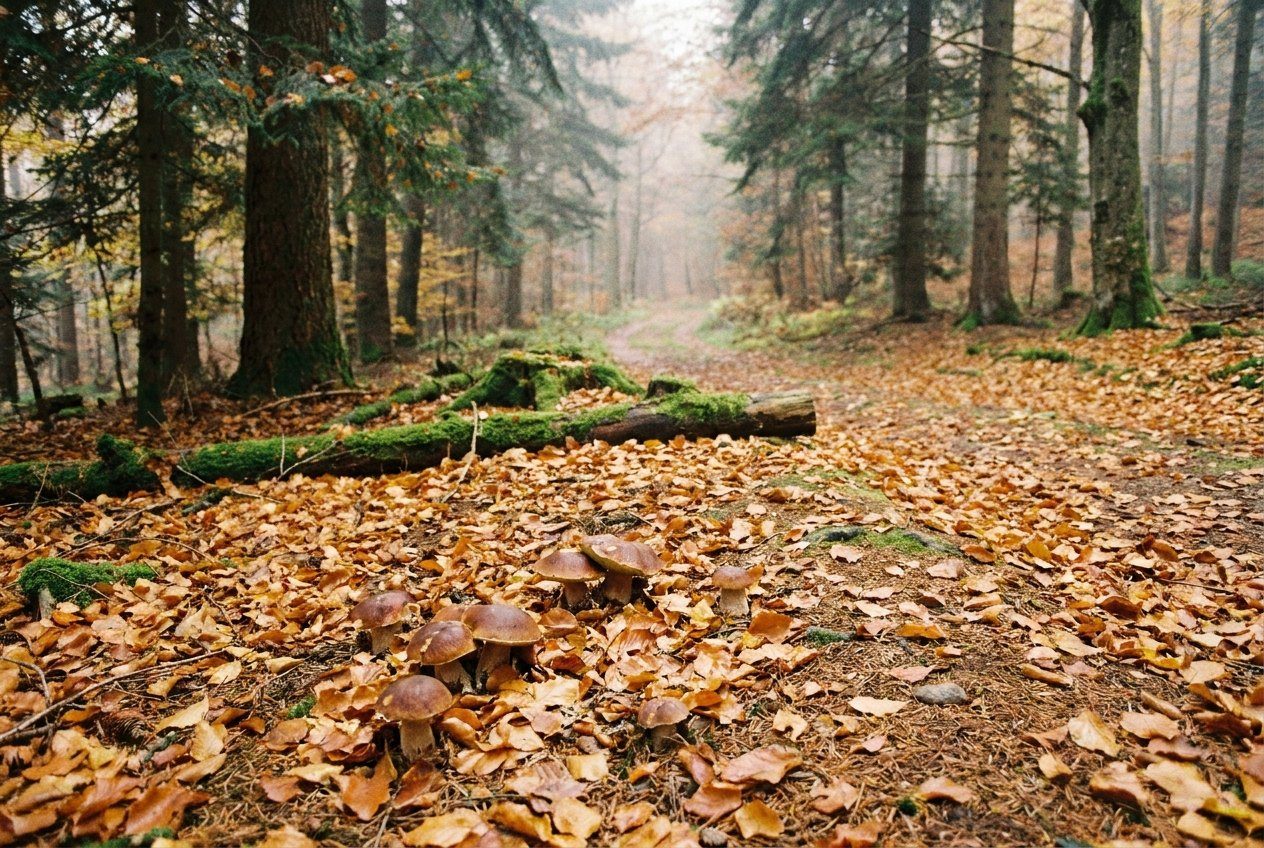
Autumn may be the finest season in the Pays d'Urfé. The air is clear, the light is low and golden, and the forests put on a show of colour against the dark backdrop of conifers. It is also the season of gathering: chestnuts, mushrooms and the last fruit from old orchards. With a little knowledge and some care, it is a wonderful time to walk.
A palette of beech and fir
The hills carry a mix of broadleaf and conifer woodland. Beech dominates many slopes at middle altitude, and in autumn its leaves move from green to yellow, then to copper and russet. Birch adds bright gold, oak turns a deeper bronze and rowan berries glow red along the edges of tracks. Against these warm colours, the silver fir and spruce of the higher forests stay dark green, creating strong contrasts that look especially good in morning mist or late-afternoon sun.
The colours usually peak somewhere between mid-October and early November, but timing varies with altitude and weather. Higher woods change earlier, valley woods later. A single frosty night can accelerate the change, and a gale can strip the trees within hours, so it is worth watching the forecast and going out on the first calm, sunny day.
Good places for colour
- Ridge tracks where you look down over mixed woods on both sides.
- Viewpoints such as the hilltop at Cherier, which overlooks the Roannais plain.
- Forestry roads into the Bois Noirs, where beech and fir meet.
Chestnuts on the lower slopes
Sweet chestnut grows on the lower, warmer slopes and along old lanes, where trees were once planted to feed families and livestock. In autumn the spiny husks split and drop their shiny brown nuts. Chestnuts were long a staple food in poorer hill areas of central France, and the tradition of roasting them in the evening survives in many households.
Many chestnut trees stand on private land or in managed orchards, and the nuts belong to the owner. Gathering a handful from the side of a public lane is generally tolerated, but avoid fenced plots and orchards, and never climb trees or shake branches. When in doubt, leave them.
Cep season and the rules on picking
Turn the page: Cherier and the long view eastAutumn rain followed by mild days brings out the mushrooms, and the cep, or cèpe, is the prize most pickers seek. You will see people walking slowly through the woods with baskets in the early morning, and car parks at forest edges fill up when conditions are right. Ceps and other edible mushrooms also feature in local cooking, covered in our guide to Forez and Roannais food.
Forests in France belong either to private owners, to communes or to the state, and permission matters. On private land, you need the owner's consent. In public forests, local rules often limit the quantity per person per day, and some areas may be closed to picking altogether. These limits are set locally and can change from year to year.
- Use a basket, not a plastic bag, so spores can spread and mushrooms stay firm.
- Cut or twist mushrooms gently and avoid raking the forest floor.
- Leave small and very old specimens.
- Pick only what you can use.
Safety first
Some of the most dangerous mushrooms in Europe grow in these woods, and several look alarmingly like edible species. Never eat a mushroom unless you are completely sure of its identity. In France, some pharmacists can help identify mushrooms, though not all offer this service any more; local mycological societies sometimes hold identification sessions in autumn. If in doubt, throw it out.
Hunting days: walking with care
Autumn is also the heart of the hunting season, which typically runs from early autumn into winter, with organised drives for wild boar and deer held in many forests. The days and practices depend on each commune and hunting association, and the arrangements are set locally each season.
On hunting days, choose open ridges or village lanes, wear bright orange or yellow clothing and stay on marked paths. Avoid walking through dense cover and keep dogs close. If you hear shots or see hunters, make your presence known calmly and move away from the area. Our guides to walking circuits and mountain biking include more on sharing the hills during the season.
Planning an autumn day
Days shorten quickly in October, and evenings in the hills turn cold, so set out early and plan to be back before dusk. Mist often fills the valleys in the morning while the ridges bask in sunshine; a short climb can lift you above it. After rain, paths turn muddy and leaves hide roots and stones, so wear boots with good grip.
A loop that combines a wooded valley, a ridge with a view and a return past old farms gives you the full range of autumn colour. Carry a flask, a warm layer and a map, and take time to stop. A small bag for litter and a pair of light gloves for chestnut husks are worth packing too. The smell of damp leaves, the sound of falling chestnuts and the low sunlight through the beeches are as much part of the season as anything you bring home in your basket.
Here ends the chapter. Back to the contents.