
Few rivers in France carry as much literary weight for their size as the Lignon du Forez. It is not wide, it is not navigable, and for most of its course it runs between alders and meadows that look much like any other valley in the Loire département. Yet for four centuries readers across Europe knew its name, because Honoré d'Urfé chose its banks as the stage for the shepherds and nymphs of his long pastoral novel. Following the river today is a way to see how ordinary that stage really is, and how pleasant.
A river in three moods
The Lignon rises high in the Monts du Forez, on the granite uplands south of the Pays d'Urfé, and the first part of its course is a mountain stream: quick, clear, tumbling over boulders under beech and fir. Lower down the valley opens, the slopes carry small fields and hamlets, and the water starts to wind. By the time it reaches Boën-sur-Lignon it has become a proper river with a town on its banks, and below Boën it slides out into the Forez plain, a broad, flat basin of ponds, hedges and cereal fields, before joining the Loire.
That change from steep to flat happens over a short distance, which is part of the appeal. In a single day you can stand beside a rushing stream among conifers in the morning and watch herons over still water in the afternoon. Each section suits a different kind of outing, so it helps to decide in advance whether you want a forest walk, a town stroll or a gentle ramble across open country.
Boën-sur-Lignon, where the valley meets the plain
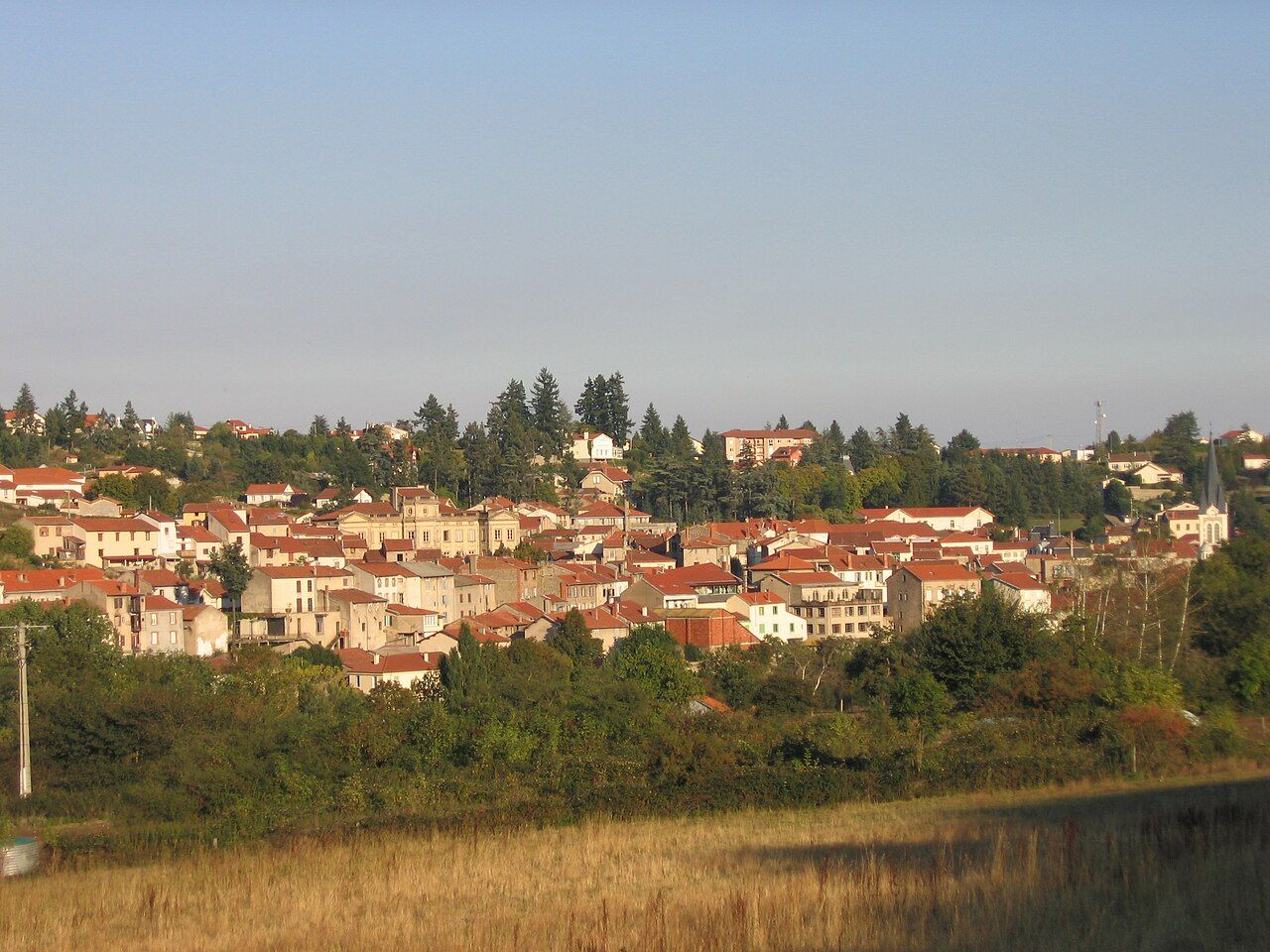
Boën-sur-Lignon sits right at the hinge between hills and plain, its roofs climbing a slope above the water. It is a working small town rather than a showpiece, with a church spire, terraced streets and a riverside park that makes an easy starting point. Several bridges cross the Lignon here, and the stretch of water around them, with stone piers and shallow riffles, gives a good idea of how the river looked when mills and small workshops lined it.
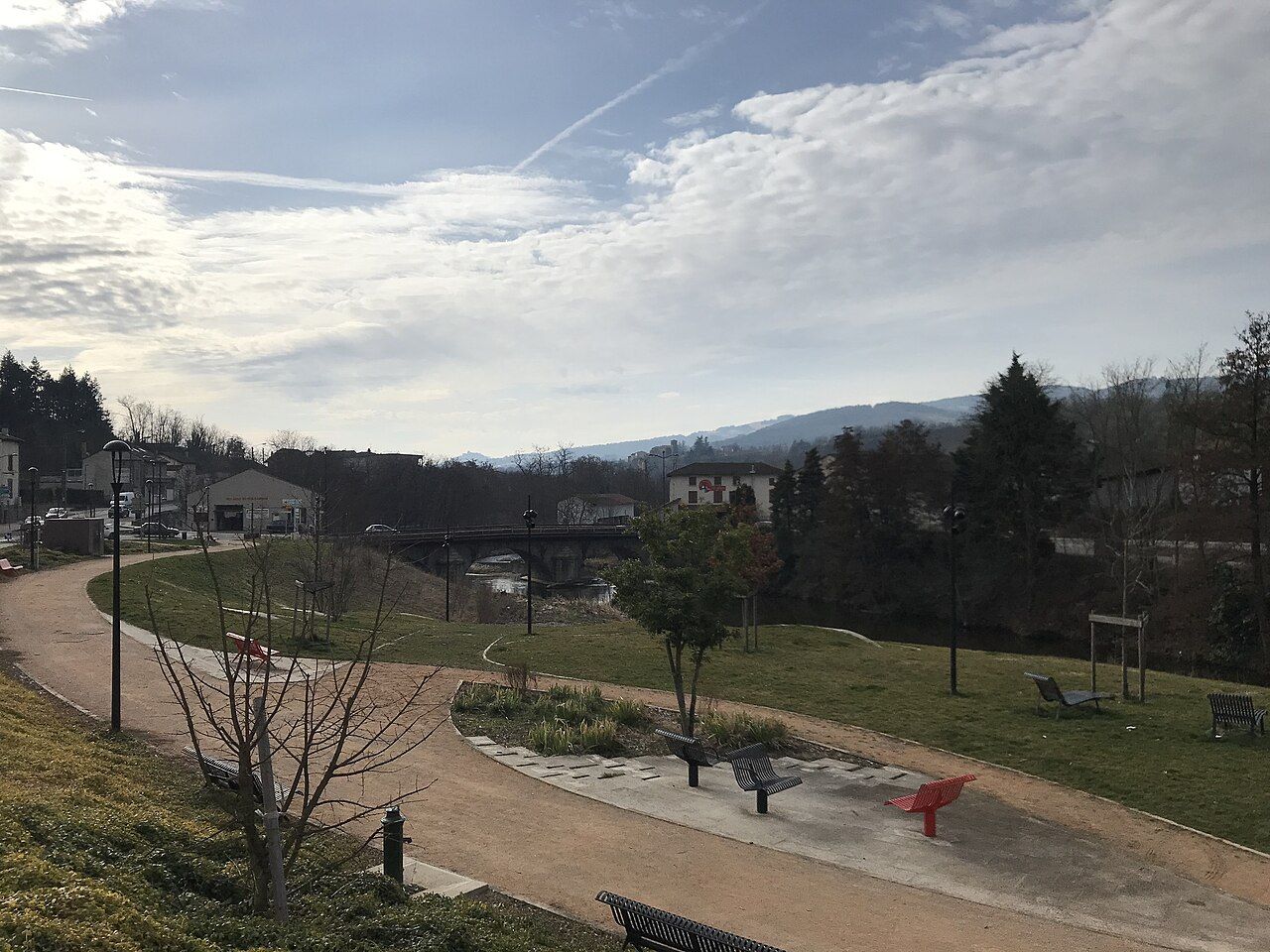
From Boën, minor roads follow the valley upstream towards Sail-sous-Couzan and the hill country, or downstream into the plain. Either way, you are rarely more than a short walk from the water. Look at the map before you set off: some riverside paths are public tracks, others cross private meadows, and fences or fallen trees can interrupt a route that looks continuous on paper.
Mills, weirs and bridges
Like most rivers of the region, the Lignon once powered a string of mills. Grain, oil and later small industries used the current, and the traces remain if you know what to look for: a low weir angled across the stream, a stone-lined leat running off to one side, a tall building with blocked arches at water level. Many have become houses or simply ruins in the undergrowth; treat them as private unless a sign says otherwise.
The bridges are easier to enjoy. Old masonry arches with cutwaters stand alongside later road bridges, and from most of them you can lean on the parapet and watch the current. The granite and sandstone used in the older ones came from the surrounding hills, the same stone you see in the farms higher up the valley, a theme picked up in our piece on granite farms and stone crosses.
The novel on the riverbank
Turn the page: Reading the yellow marks: waymarked walks of the Pays d'UrféHonoré d'Urfé grew up in the Forez, and when he wrote L'Astrée, published in parts between 1607 and 1627, he set it in an idealised version of the land along the Lignon in the fifth century. The shepherd Céladon throws himself into the river in despair after his beloved Astrée banishes him, and the plot spins out from there through love debates, disguises and digressions. You can read more about the book itself in our guide to L'Astrée.
Walking the lower valley, you will not find monuments to Céladon around every bend, and that is rather the point. The author took a real, modest landscape and turned it into a dream of pastoral harmony. The family seat most closely tied to that world is downstream in the plain, near Saint-Étienne-le-Molard, where the Bâtie d'Urfé stands close to the river. Combining a riverside walk with a visit there makes a coherent half-day.
Fishing the Lignon
The upper Lignon and its tributaries are trout water, cold and well oxygenated, while the slower lower reaches hold coarse fish. Anglers in France need a fishing card issued through an approved local association, and each stretch has its own category, season dates, size limits and sometimes no-kill zones.
If you are simply walking, a few courtesies help: keep dogs out of the water in spawning season, close any gate you open, and stay off cultivated fields even when the riverbank beyond them looks inviting.
Planning a day along the river
A loose plan works best. Many visitors start in the hills, perhaps after a morning in Noirétable and the Forez hills, then drive down through the valley, stopping where a bridge or lay-by gives access to the water. Boën makes a natural midday stop, and the afternoon can be spent in the plain, either at the Bâtie d'Urfé or on the flat lanes between hedgerows and ponds, which are easy on foot or by bike.
- Upper valley: forest, fast water, steeper paths; best in late spring and early autumn.
- Boën-sur-Lignon: bridges, riverside park, town streets; good in any season.
- Forez plain: open views, birdlife on the ponds, long flat lanes; pleasant in spring and on clear autumn days.
Summer can be hot down in the plain, and after heavy rain the river rises quickly and paths near the water turn muddy. Spring brings fresh green and full streams, while autumn adds colour in the riverside trees and quieter roads. Whatever the season, a picnic of local cheese and bread on the bank is hard to improve on; our page on what the Forez and Roannais eat has ideas for what to pack.
A car gives the most freedom, since public transport along the valley is limited and timetables change. Bring a detailed map at 1:25,000 scale, because riverside paths are not always waymarked and small roads branch often. Footwear with grip matters on wet stones and grassy banks. There are no fees to walk along public paths, but museums and heritage sites set their own opening periods and charges.
Above all, take your time. The Lignon rewards slow attention: the change in the sound of the water as it leaves the hills, the light on the shallows below a weir, the way the valley opens up as you go downstream. Those are the same qualities that once made a writer imagine an entire pastoral world on its banks.
Here ends the chapter. Back to the contents.