
From fortified farm to Renaissance house
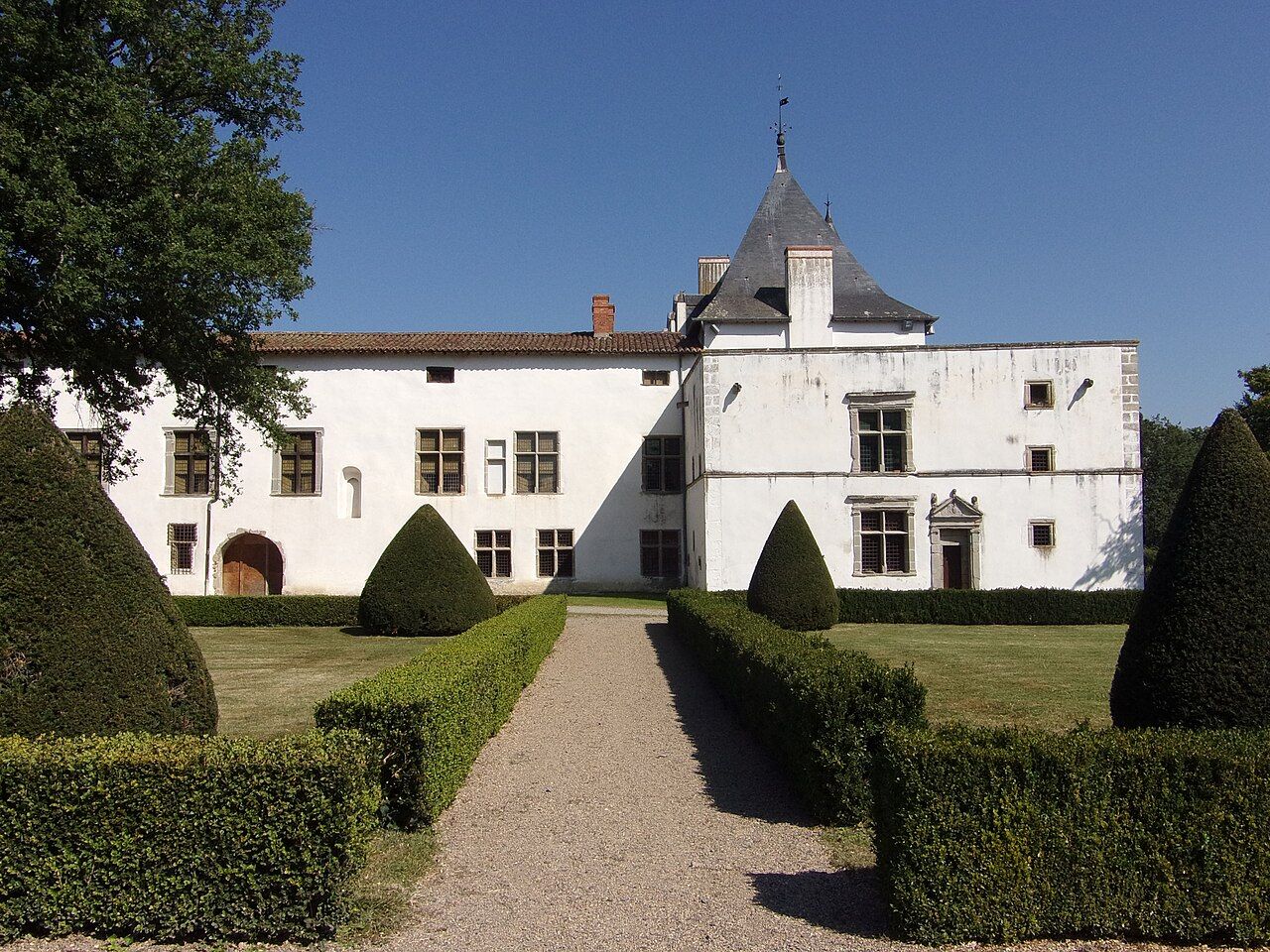
The Bâtie d'Urfé stands in open country near Saint-Étienne-le-Molard, a few kilometres from Boën-sur-Lignon, where the Forez plain begins to rise towards the hills. From outside it looks calm and white, with tiled roofs, a slate-capped tower and long rows of windows. The surprise lies inside, where the decoration is among the most remarkable of the Renaissance in this part of France.
The name "bâtie" points to the house's origin as a modest fortified dwelling of the Middle Ages. The Urfé family had long held lands in the hills to the west, around their castle above Champoly, and the house in the plain was at first a secondary seat. It was transformed in the middle of the sixteenth century by Claude d'Urfé, a courtier and diplomat who had spent time in Italy on missions for the French king, including at the papal court and the Council of Trent.
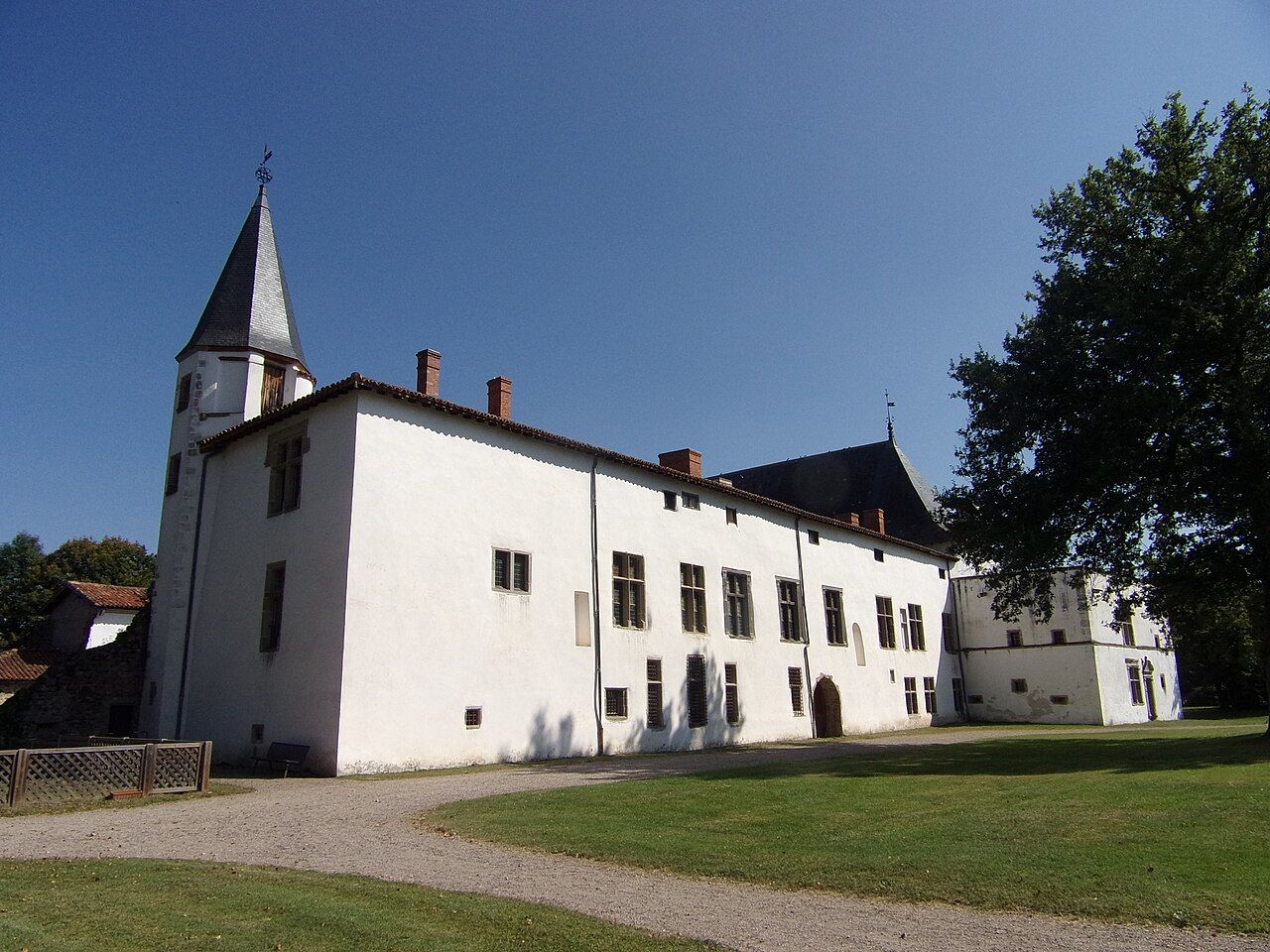
Claude came home with Italian ideas about architecture, gardens and decoration, and he set about turning the old house into a statement of learning and taste. The result is a building where the Italian Renaissance meets the solid rural traditions of the Forez, and where almost every room carries a reference to faith, classical culture or the family itself.
The grotto of freshness
The most famous room is the grotto, a "grotte de fraîcheur" built on the ground floor as a cool retreat from summer heat. Its walls, niches and vaults are covered with pebbles, shells, coloured sands and stones set in patterns, framing statues of gods and figures from mythology. Water once played a part in the effect, and the whole room was designed to astonish visitors stepping in from the bright courtyard.
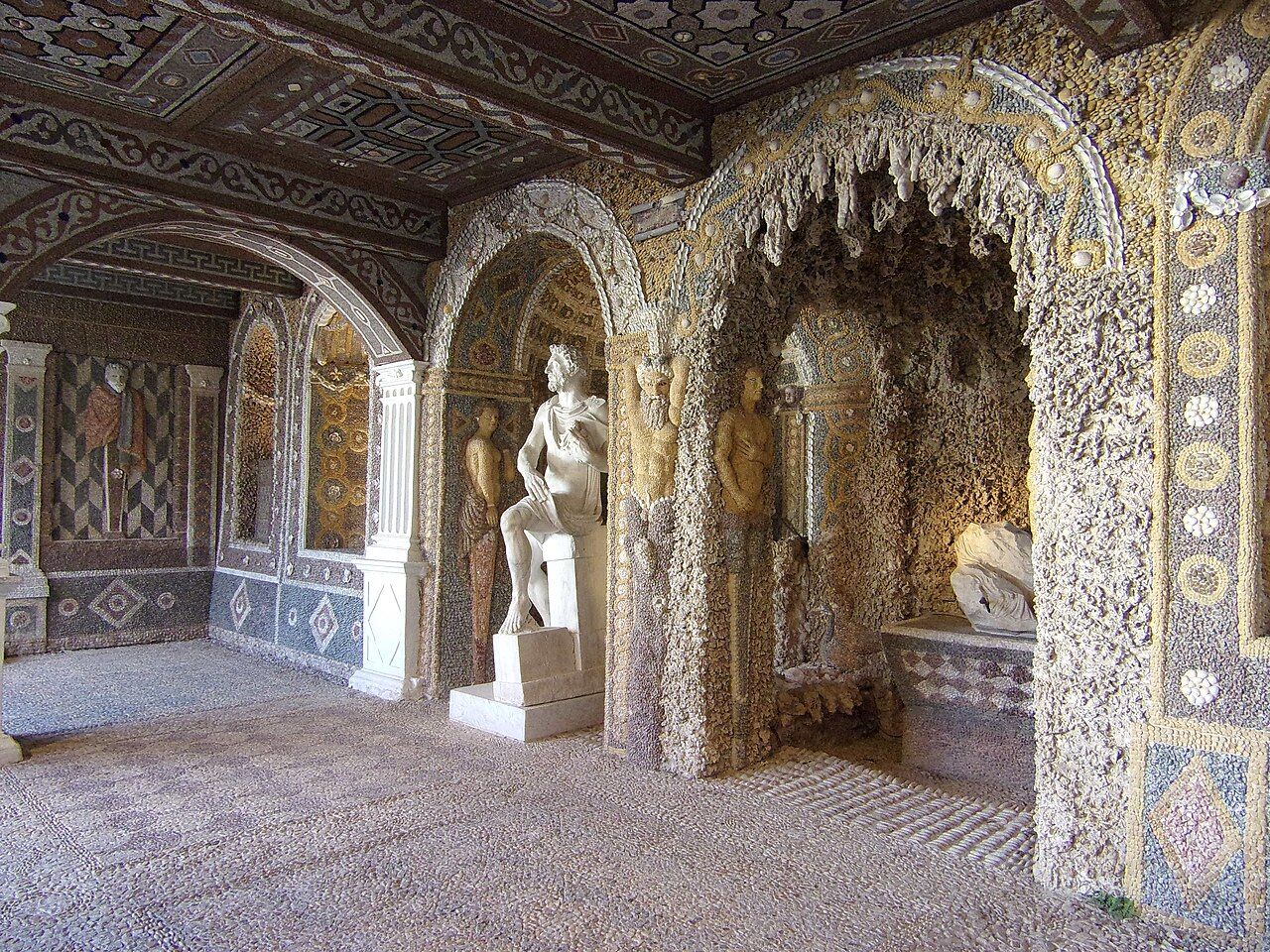
Look up as well as around. The ceiling is worked in the same materials, with geometric compartments and scrolling borders picked out in grey, white and rust-coloured pebbles. White columns with carved capitals hold up the arches, and the light from the garden windows changes the mood of the room through the day.
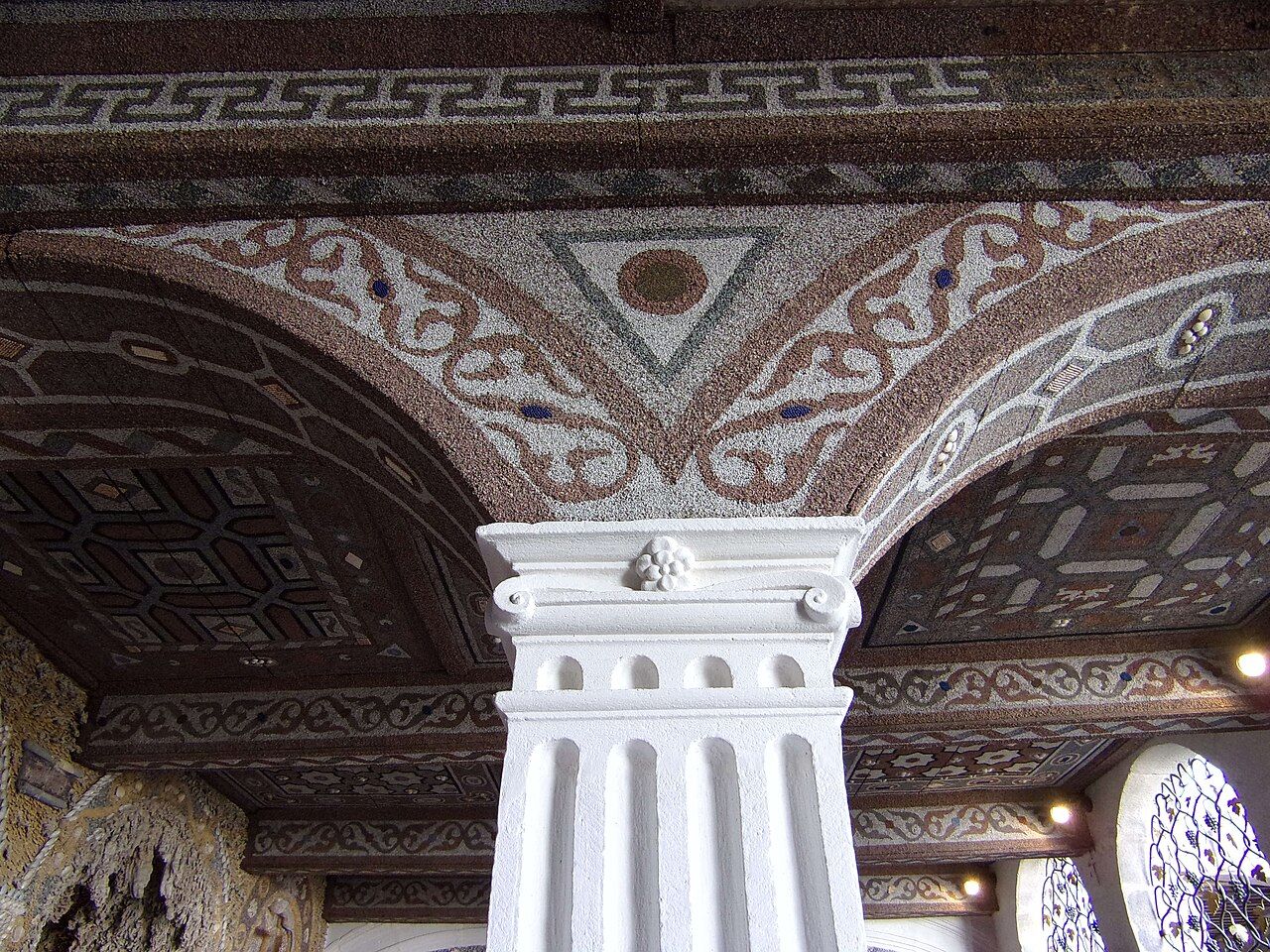
This kind of decoration was fashionable in Italian villas of the period, but very few examples of its kind have survived in France. That rarity, as much as its beauty, is what makes the grotto famous.
That rarity, as much as its beauty, is what makes the grotto famous.
The sphinx, the ramp and the chapel
From the courtyard a broad ramp rises to the upper floor, a gentle slope said to have been designed so that a rider could go up without dismounting. A stone sphinx keeps watch nearby, one of the emblems that give the house its slightly mysterious air. Sphinxes appealed to Renaissance humanists as symbols of hidden wisdom, and the figure suits a house built by a man who prized books and learning.
The chapel was the spiritual heart of Claude's project. Its vault is covered with deep coffers in stucco and gilding, crossed by bands of blue decorated with garlands of fruit and leaves. At the centre a panel carries the letters D.O.M.S., a Latin dedication to God, framed by triangles symbolising the Trinity.
Turn the page: L'Astrée, a novel that made a river famous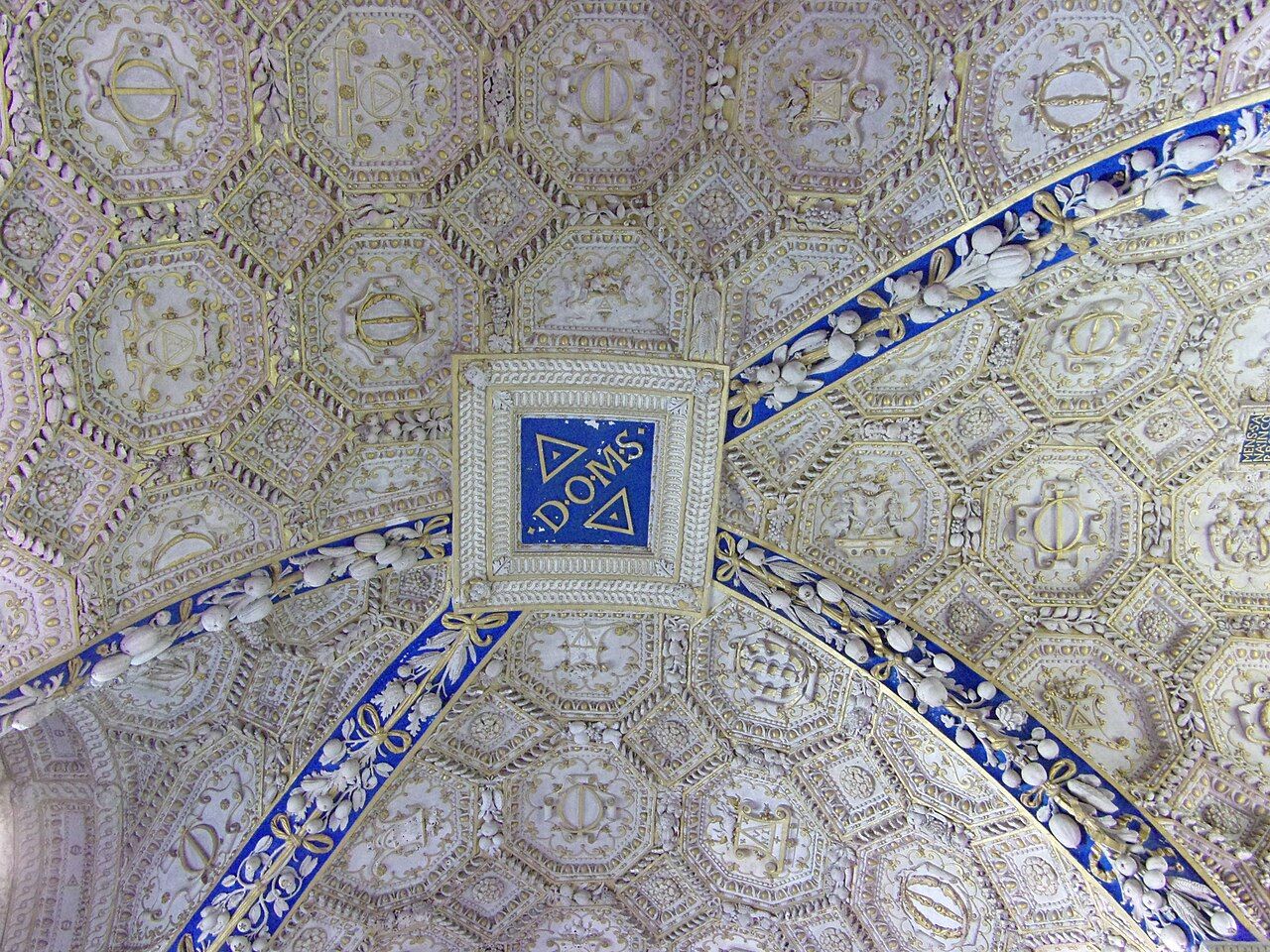
Much of the chapel's original woodwork and furnishing was dispersed in the nineteenth century, when the château passed through difficult times and parts of its decoration were sold. What remains in place still gives a strong idea of the richness of the original, and visitors often find the chapel the most moving room in the house.
Take your time in the chapel. The pattern of the vault rewards a long look, and the symbols worked into the coffers, from monograms to emblems of faith and learning, reflect the mind of a patron who wanted every surface to carry meaning. A guide, or a good printed plan, helps you read them.
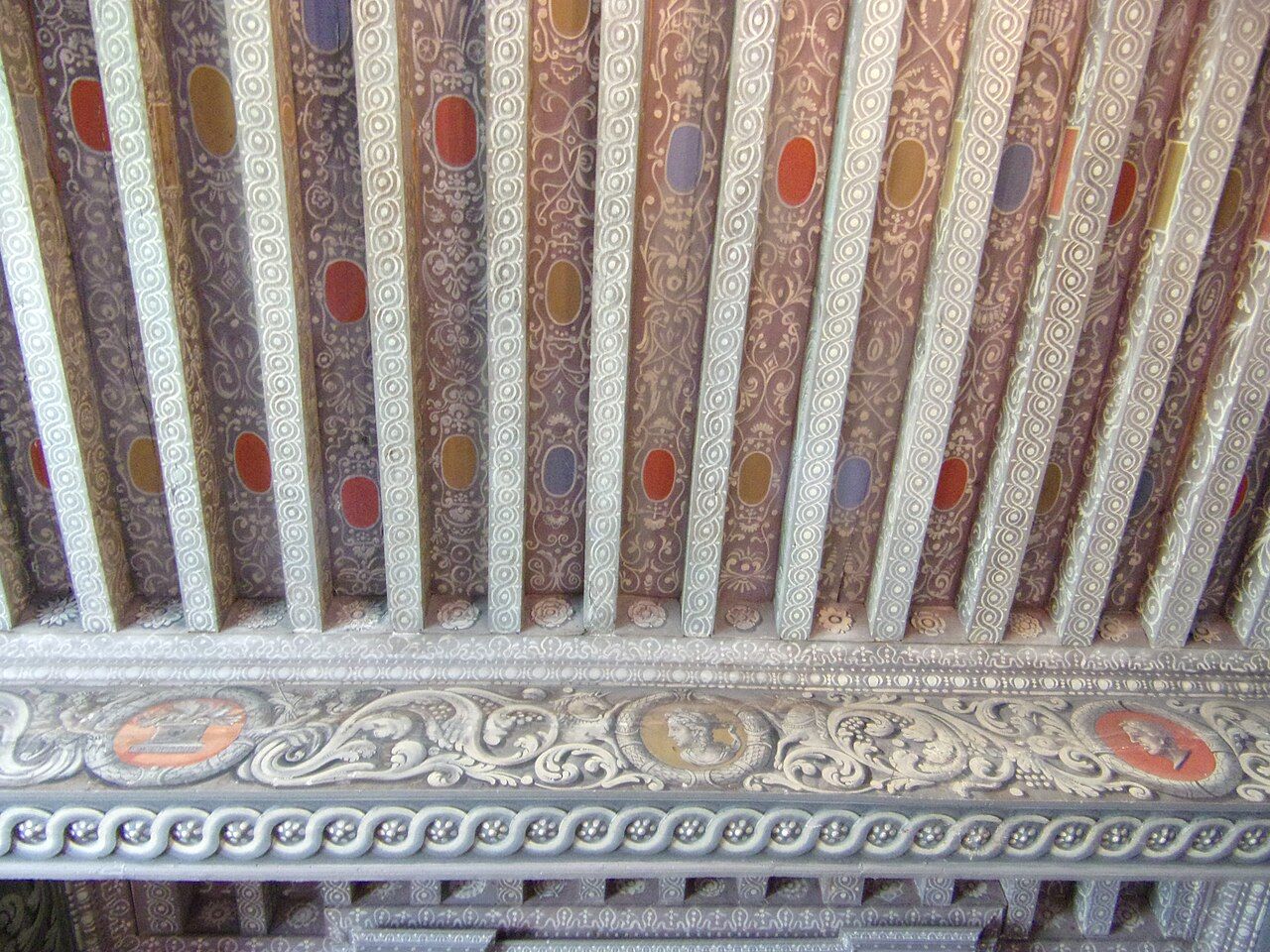
Other rooms keep their painted beamed ceilings, with scrolling foliage, coloured medallions and portrait heads running along the friezes. They are easy to miss if you look only at eye level.
The gardens and the family
In front of the house lies a formal garden of lawns, box hedges and clipped yews, laid out in the Italian spirit and crossed by straight gravel paths. A small temple-like pavilion stands in the garden, a further sign of Claude's love of the classical world. The garden has been restored in recent decades along lines that echo its Renaissance plan, and it is pleasant to walk through on a warm afternoon even if you do not go inside.
The Bâtie also connects to the family's most famous writer. Honoré d'Urfé, Claude's grandson, spent much of his youth here, close to the river Lignon. The meadows and groves around the house fed the landscapes of his pastoral novel, L'Astrée, and a riverside path near the château now takes its name from the book. Walkers who want more of the river can follow it upstream or down, as described in our guide to walking along the Lignon.
To understand where the family came from, drive up into the hills to the ruined Château d'Urfé above Champoly. Seeing the medieval stronghold and the Renaissance house on the same day shows how one family moved from defending a hilltop to cultivating art and ideas in the plain.
Visiting the Bâtie today
After the Urfé line died out, the house passed through several hands and suffered damage and sales. Early in the twentieth century a learned society from Montbrison bought it to save it, and today it belongs to the Loire département, which looks after the building, the gardens and a programme of visits and cultural events.
- Opening. The château opens to visitors for much of the year, with longer hours in the warmer months.
- Visits. Both self-guided and guided visits are usually offered; the guided ones explain the symbols in the decoration that are easy to miss alone.
- Access. The house lies in open country and is easiest to reach by car. Some rooms are reached by stairs.
- Time. Allow a couple of hours for the house and garden, and more if you add a walk by the Lignon.
Approach the main front down the gravel path between the hedges and the house opens up in stages: first the pale walls, then the tower, then the doorway framed by Renaissance stonework. Inside, the grotto and the chapel reward slow looking. Few places in the Loire département show so clearly how the ideas of the Renaissance travelled from Italy into the French countryside, carried home by one curious, ambitious and well-read man.